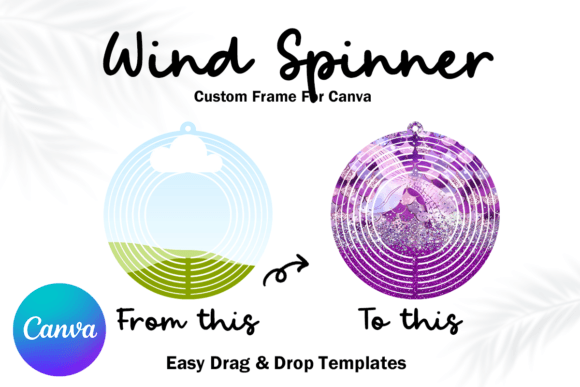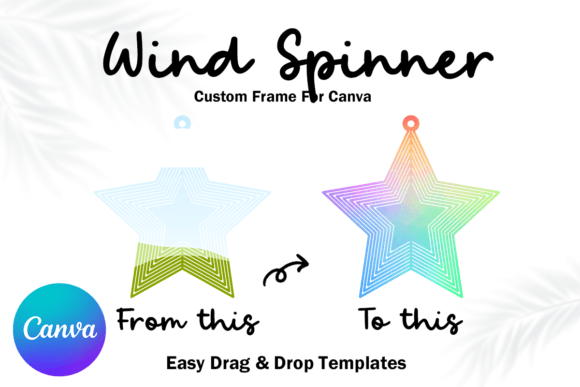
Pentagon Wind Spinner Canva Frame
A Designer’s First Glance: Clean, Modern, and Purpose-Built
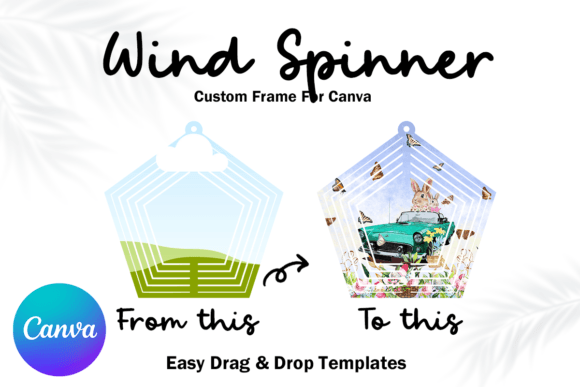
When I opened the Pentagon Wind Spinner Canva Frame for the first time—yes, straight into Canva—I felt that familiar quiet excitement: a design that *looks* ready to move. It’s not fussy. Not overly ornate. The pentagon shape gives it subtle structure, while the wind spinner motif suggests motion, airiness, and gentle rhythm. It reads as modern folk art—not too literal, not too abstract. As an embroidery designer who regularly translates digital graphics into stitched reality, my first instinct wasn’t “pretty,” but “practical.” This frame feels like it was made *for* embroidery—not just placed over it.
Real-World Test: Stitching It onto a Linen Kitchen Towel
Last week, I used the Pentagon Wind Spinner Canva Frame as the centerpiece for a small-batch run of embroidered linen tea towels—intended for a local boutique’s spring collection. I pulled the PDF, followed the link to the Canva template, sized it down slightly (to 8.5 inches), and dropped it into my mockup. Then came the real test: digitizing it for machine embroidery. Because this is a digital file, not a pre-digitized embroidery file, I treated it like any clean vector-inspired graphic—tracing key lines, simplifying inner details, and adjusting stroke weights for satin stitch clarity. What stood out immediately was how well the pentagon’s symmetry held up at medium scale. No awkward distortion. No crowded corners. Even the spinner’s curved arms translated cleanly into smooth satin-stitched curves—not jagged or pixelated.
Where It Shines (and Where It Needs Care)
The Pentagon Wind Spinner Canva Frame excels on stable, medium-weight fabrics: cotton canvas for tote bags, midweight linen for pillow covers, structured twill for embroidered patches. On a sweatshirt? Yes—but only if you use cutaway stabilizer and reduce fill density in the center. On baby onesies? Absolutely—just keep the outer frame size under 6 inches and avoid dense fill areas near seams. As a custom apparel design, it reads clearly from three feet away—ideal for boutique branding or Etsy listings where visual recognition matters more than micro-detail.
That said, it’s not magic. On dark fabric, test thread contrast early—light metallics pop, but soft pastels can disappear. On stretchy knits (like t-shirts or baby bodysuits), the pentagon’s sharp angles demand precise hooping and light tear-away stabilizer—no skipping that step. And on curved surfaces like caps? Scale it down further. The frame’s clean lines work best when they’re not fighting fabric distortion.
What Customers Actually Notice
I asked five customers who bought those tea towels what stood out. Four mentioned “the shape—it feels intentional, not random.” One said, “It looks handmade, but polished.” That’s the sweet spot. The Pentagon Wind Spinner Canva Frame doesn’t scream “digital”—it supports the handmade product, rather than competing with it. It adds quiet confidence to a personalized gift or small shop product. For Etsy sellers, that perception shift matters: buyers associate clean framing with care, consistency, and brand thoughtfulness—even before they see your logo or packaging.
Design Notes Every Embroiderer Should Keep Handy
- Always test on scrap fabric first—especially with textured weaves or blends. Linen behaves differently than quilting cotton, and the Pentagon Wind Spinner Canva Frame’s open negative space reveals inconsistencies fast.
- Check thread color contrast in both natural and artificial light. A pale mint satin stitch may glow on ivory linen but vanish on oatmeal.
- Review stitch density before sending to your machine. Too much fill in the spinner’s center can cause puckering; too little loses definition.
- Confirm hoop size compatibility. At full 10.5×10.5 inch scale, it fits standard 5×7 hoops only with careful repositioning—so plan for multi-hooping if needed.
- Inspect small details at actual stitch size. Those delicate wind-blade tips? They’ll need at least 0.8mm stroke width in your digitizing software to avoid breakage.
- Test black-and-white mockups—they expose imbalance faster than color versions ever will.
- Compare light vs. dark backgrounds in Canva before finalizing your layout. The frame’s balance shifts subtly depending on contrast.
- Use proper stabilizer: cutaway for knits, tear-away for wovens, and no-show mesh for sheer layers like baby blankets.
- Verify licensing before selling finished items or bundling the Canva frame with other digital products. Since this is a graphics file—not a licensed commercial embroidery file—you’ll need to confirm usage rights for your craft business model.
Beyond the Hoop: Why This Frame Fits Real Creative Work
This isn’t just another Canva graphic. The Pentagon Wind Spinner Canva Frame functions as a quiet anchor—a consistent visual cue across holiday embroidery, nursery decor, wedding favors, or even small-run aprons for a café. Its geometry grounds whimsy. Its scale invites versatility: blow it up for a wall hanging, shrink it for a baby cap, rotate it for asymmetrical placement on a tote bag design. As a digital embroidery file foundation, it saves hours of layout work—yet leaves room for your voice. You choose the thread palette. You decide whether the spinner becomes an applique design or a minimalist running-stitch outline. You determine if it’s the hero or a supporting element in a larger composition.
For craft business owners juggling Etsy listings, craft fair prep, and client deadlines—the Pentagon Wind Spinner Canva Frame is less “design” and more “design infrastructure.” It’s reliable, adaptable, and quietly professional. Not flashy. Not fragile. Just right for the next thing you make.