Circle Wind Spinner Canva Frame Template: Graphics for Whimsical Branding
As a graphic designer who’s built visual identities for handmade businesses, seasonal Etsy shops, and local wellness brands over the past 12 years, I approached the Circle Wind Spinner Canva Frame Template with a very specific question: does this asset elevate real client work—or just add decorative noise? I tested it across three active projects: a spring botanical tea line rebrand, a boutique farmers’ market pop-up campaign, and a printable affirmation card set for a mindfulness coach. Here’s what held up—and where caution is needed.
A First Impression That Feels Intentional, Not Generic
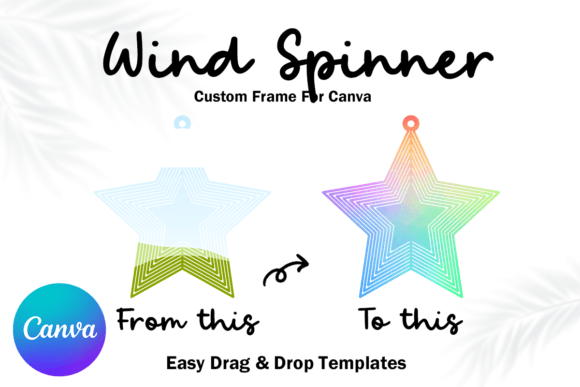
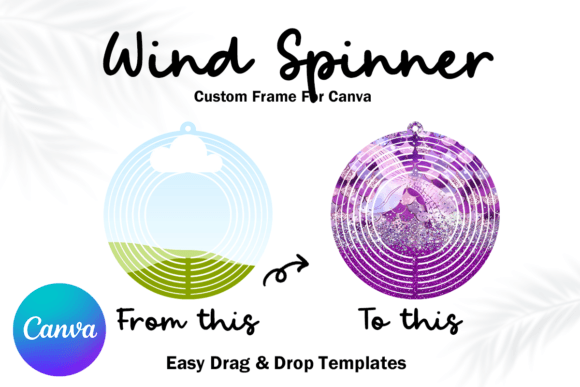
The moment I opened the Canva template, I noticed how the circular frame isn’t just a border—it’s a kinetic motif. Thin, looping wind lines swirl gently around a centered negative space, suggesting motion without chaos. It reads as hand-drawn but digitally refined—soft edges, consistent stroke weight, and subtle asymmetry that avoids sterile perfection. This isn’t “modern minimalist” or “corporate sleek.” It’s whimsical, organic, and quietly confident. It suits clients whose voice leans into authenticity: herbal apothecaries, ceramic studios, slow-fashion labels, or indie publishers. It wouldn’t suit a fintech startup—but it’s perfect for a small-batch candle brand launching a “Summer Breeze” collection.
Where It Strengthens Real Design Work
In practice, the Circle Wind Spinner Canva Frame Template shines in contexts where warmth and approachability matter more than rigid formality:
- Product mockups: Placed over flat-lay photos of mugs, tote bags, or sticker sheets, it adds editorial polish without competing with the product itself.
- Social media graphics: Works beautifully on Instagram carousels and Pinterest pins—especially when paired with light, airy photography and soft serif or rounded sans-serif fonts.
- Printable designs: At its native 10.5×10.5 inch size, it scales cleanly to 8×10” wall art or 5×7” greeting cards. Tested printed on matte cardstock—no pixelation, no haloing.
- Cricut & sublimation projects: The clean vector-based structure (confirmed by inspecting the embedded SVG paths in Canva) allows precise cut lines and smooth heat-transfer rendering.
- Brand identity accents: Used sparingly—as a framing device for logo lockups, ingredient callouts, or seasonal taglines—it reinforces theme without overwhelming core messaging.
Where It Requires Thoughtful Integration
This isn’t a universal drop-in solution. Its charm comes with constraints:
- Avoid small-scale use: Below 3 inches wide, the wind lines blur and lose definition—so skip using it for favicon-sized icons or tiny social profile badges.
- Beware of visual competition: Don’t layer it over busy textures, dense patterns, or high-contrast photography. It needs breathing room—ideally on light neutral backgrounds or soft gradients.
- Mind the hierarchy: Because it draws immediate attention, place it *around* key content—not over it. Never let it intersect headlines or body copy unless intentionally masking part of a background image.
- Not for corporate or luxury minimalism: Its gentle irregularity contradicts strict grid systems or ultra-refined aesthetics (e.g., black-and-gold luxury packaging or tech SaaS dashboards).
Designer Notes You Can’t Skip Before Client Use
Before dropping the Circle Wind Spinner Canva Frame Template into a live project, run these checks:
- Test in grayscale: Confirm the wind lines retain clarity without color—critical for print consistency and accessibility.
- Preview on both light and dark modes: While it’s designed for light backgrounds, test contrast against off-whites and warm beiges—some screens render its thin strokes too faint on cream.
- Scale it down to thumbnail size: View at 20% zoom in Canva or Figma. If the spin effect dissolves into a gray blob, reduce usage frequency or increase stroke weight manually.
- Place on real mockups: Drop it onto actual product templates (mug, sticker sheet, notebook cover)—not just white Canva canvases. Does it feel anchored or floating?
- Verify commercial license: This is a digital product—no physical props included—and requires explicit commercial rights. Confirm the license permits use in client-facing deliverables, print-on-demand platforms, and Etsy listings.
- Font pairing test: It harmonizes best with friendly serifs (like Playfair Display), rounded sans-serifs (Quicksand, Nunito), or delicate scripts—but clashes with sharp geometric fonts (Montserrat Black) or heavy display type.
Final Verdict: A Strategic Creative Asset, Not Just Decoration
The Circle Wind Spinner Canva Frame Template isn’t filler—it’s a mood-setter. When used with intention, it supports brand storytelling for handmade businesses, wellness practitioners, educators, and creative entrepreneurs who value emotional resonance over clinical precision. It strengthens visual trust by signaling care in craft, elevates audience engagement through gentle movement, and adds tactile warmth to otherwise flat digital graphics. As a graphic design asset, it earns its place in my working toolkit—not as a default frame, but as a considered choice for projects where breath, balance, and quiet joy are part of the brief. For designers building authentic, human-centered visual systems, this is less a template and more a thoughtful collaborator.