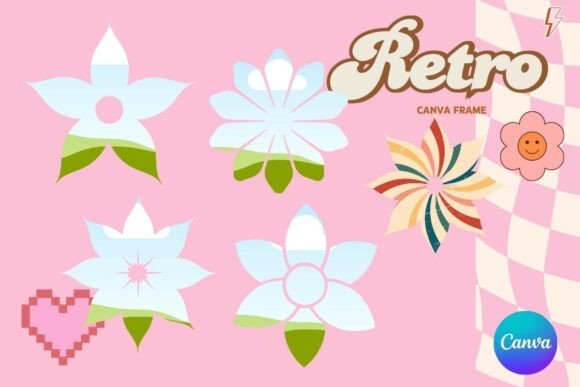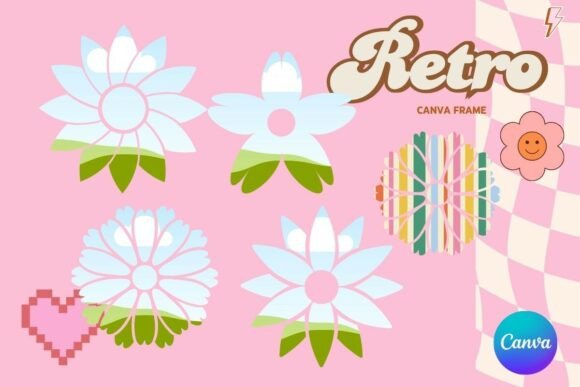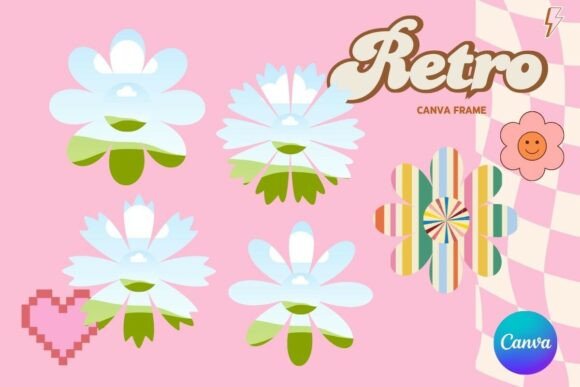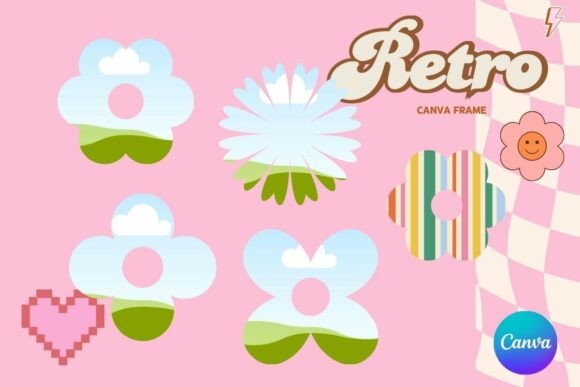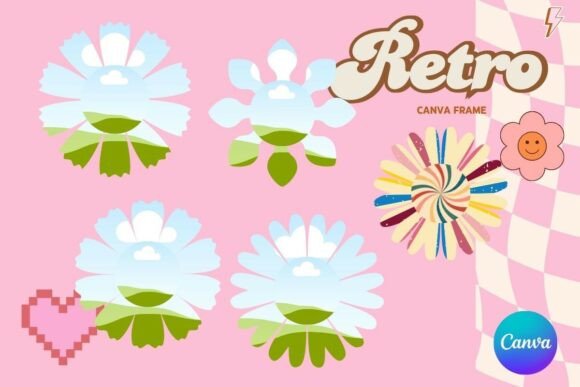
Retro Flower Canva Frame Add Photo_18
A Designer’s First Look: Charm with Clear Intent
When I opened the Retro Flower Canva Frame Add Photo_18, what struck me wasn’t just the floral motif—it was the intention behind it. This isn’t a cluttered vintage collage or an overwrought botanical illustration. It’s a balanced, airy frame built for breathing room: soft curved corners, open negative space around the central photo area, and delicate retro florals that lean into mid-century charm—not kitsch. The petals have gentle weight; the stems curve with quiet confidence. As an embroidery designer who regularly translates digital graphics into stitched texture, I immediately saw how this frame could anchor a personalized gift without overwhelming it.
Real Project Test: A Custom Embroidered Tote for a Local Boutique
Last week, I used Retro Flower Canva Frame Add Photo_18 as the foundation for a limited-run embroidered tote bag—meant for a small-town boutique launching a “Local Love” summer collection. We printed a soft-focus photo of their founder’s herb garden inside the frame, then stitched the entire composition onto natural canvas. The result? A handmade product that felt intentional, warm, and quietly sophisticated—not like a generic clipart overlay. Customers paused at the display rack. They touched the stitching. They asked, “Who made this?” That’s the power of a frame that supports storytelling instead of competing with it.
Where It Shines (and Where to Pause)
Retro Flower Canva Frame Add Photo_18 works beautifully on medium-to-heavyweight fabrics where stitch definition holds: canvas totes, cotton tea towels, denim aprons, linen pillow covers, and structured sweatshirts. Its open layout gives satin stitch petals room to gleam and fill stitch backgrounds time to settle without puckering. On baby onesies or lightweight tees? Proceed thoughtfully. The outer floral elements are detailed enough that tight curves and tiny leaves may lose clarity on thin fabric—especially if using low-density stabilizer or high-speed hooping.
For caps or curved surfaces, test the topmost floral cluster first. That upper-left bloom sits close to the edge of the frame—and on a curved crown, subtle distortion can blur petal separation. Likewise, dark fabrics demand careful thread color planning: ivory or pale sage threads read softly against charcoal, but they’ll vanish on black unless you add a light underlay or switch to ecru or antique white for contrast.
Commercial Use Considerations for Craft Businesses
If you’re an Etsy seller or small shop owner building a line of personalized gifts, Retro Flower Canva Frame Add Photo_18 is a smart design asset—but only when paired with clear boundaries. Since it’s delivered as a PDF with links to four Canva templates (12×12 inch each), remember: this is a graphics file, not a machine embroidery design. To turn it into a finished product, you’ll need to digitize it—or commission digitization—with attention to stitch density, jump stitch placement, and underlay logic. Don’t assume the visual balance translates directly to embroidery flow.
I’ve seen sellers skip this step and end up with dense, stiff patches that crack after two washes. For holiday embroidery or nursery decor, durability matters. For commercial embroidery projects, especially those sold online, customers notice when a flower looks flat instead of dimensional—or when inner details vanish because the fill stitch was too aggressive. Retro Flower Canva Frame Add Photo_18 gives you strong bones; your digitizing choices determine whether it walks confidently or limps.
Design Integrity in Practice
This frame earns trust because it doesn’t try to do everything. It doesn’t cram in script fonts, glitter effects, or layered shadows. That restraint makes it adaptable: swap out the photo for a monogram, a child’s doodle, or a seasonal icon—and the frame still feels cohesive. For craft fair products or boutique branding, that consistency builds recognition. For personalized gifts, it signals care: the recipient sees that space was left *for them*, not filled by default.
But don’t mistake simplicity for low effort. Those clean curves require precise hooping. That open center demands stable tension across the full 12×12 inch area—so test on scrap fabric first, especially if using textured weaves like burlap or looped terry. And always preview in black-and-white mockups: what reads as delicate in color can disappear entirely as grayscale stitch density.
Practical Notes Every Embroidery Designer Should Check
- Test before committing: Stitch a corner section on your target fabric + stabilizer combo. Watch how the outer florals hold shape.
- Review thread colors early: Retro palettes often rely on cream, dusty rose, sage, and slate. Confirm those translate well to your thread brand’s actual dye lots.
- Confirm hoop compatibility: While the design fits a 12×12 inch space, your machine’s max hoop size may require repositioning—plan for alignment seams.
- Inspect small details: Zoom in on petal tips and stem junctions. If digitizing yourself, reinforce those points with a running stitch outline or reduced fill angle.
- Check licensing scope: Since this is a digital graphics file (not an embroidery file), verify whether your intended use—especially resale of finished embroidered items—falls within the seller’s terms.
- Use proper stabilizer: Medium-weight cutaway works best for apparel; tear-away suffices for stable home goods like tea towels or pillow covers.
Final Thought: A Frame That Respects the Handmade
Retro Flower Canva Frame Add Photo_18 doesn’t shout. It invites. It gives space—to photos, to stories, to the quiet pride of hand-stitched detail. Used with intention, it elevates a custom apparel piece from “nice” to “meaningful.” Used carelessly, it flattens into decoration. As a designer who’s stitched hundreds of frames across baby embroidery, holiday embroidery, and small shop merchandise—I keep this one in my go-to folder for projects where authenticity matters more than flash. Just remember: the frame is only as strong as the craft behind it. So test, refine, and stitch like someone’s keeping your work close.