Fabric Pieces Canva Templates: Graphics for Real Crafting
As a maker who’s shipped over 3,000 handmade items—from embroidered tea towels to sublimated tumblers—I opened Fabric Pieces Canva Templates expecting another set of decorative borders. Instead, I found a quietly versatile graphic design asset that feels like it was made *for* the craft table, not just the design screen.
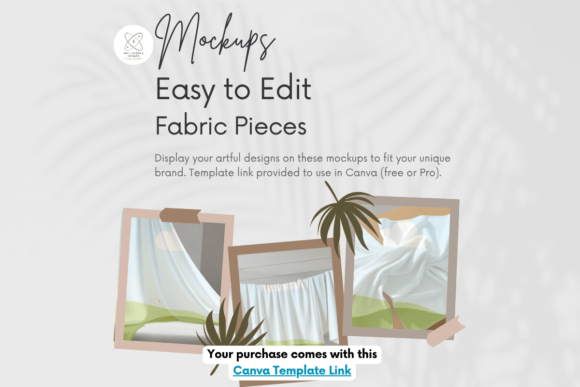
The first impression? Warm, tactile, and intentionally imperfect—think hand-cut fabric swatches with soft shadows, gentle folds, and subtle grain texture. It leans into cozy, feminine, and artisanal without tipping into cluttered or overly precious. This isn’t clipart for kids’ parties; it’s illustration with quiet confidence—ideal for Etsy buyers who scroll past mass-produced digital products and pause for something that feels *made*, not generated.
I tested Fabric Pieces Canva Templates while prepping a spring collection: custom tote bags, printable gift tags, vinyl-decorated mugs, and planner sticker sheets for my small business. Here’s where it shined—and where I paused.
Where Fabric Pieces Canva Templates Fits Like a Well-Pressed Seam
Cricut & Silhouette projects: The SVG files imported cleanly into Design Space and Silhouette Studio—no stray nodes or overlapping paths. I used the layered fabric swatch graphics as cut masks for iron-on vinyl on linen totes, and the clean outlines worked perfectly for weeding. No jagged edges, no double-cut lines. Bonus: the PNGs have crisp transparency, so I dropped them straight into printable sticker layouts without white halos.
Printable design & digital products: As a printable wall art creator, I love how these graphics add instant dimension to flat layouts. I paired a muted floral fabric piece with a minimalist serif font for “Spring Gatherings” planner pages—printed on textured cardstock, it looked like a boutique stationery line, not a Canva template. They’re also ideal for seasonal craft bundles: think Easter egg tags, holiday gift wrap accents, or wedding favor labels.
Product mockups & small business branding: Yes—the description mentions Printify and MWW, but don’t overlook how well these work for *real* handmade shop needs. I placed one fabric swatch graphic over a photo of my handmade ceramic mug (shot on plain white background), then added my logo in Canva. Instant, cohesive, premium-looking Etsy listing mockup—no Photoshop needed. It elevates your shop’s visual voice without shouting.
Tumbler wraps & sublimation design: Resized the largest fabric piece to fit a 20oz tumbler wrap, checked resolution (300 DPI confirmed in Canva’s export settings), and printed a test run on sublimation paper. Colors held beautifully on white and light-pink blanks—though I’d avoid placing the most detailed swatches directly over seams or curved edges without slight warping adjustments.
Where to Use Fabric Pieces Canva Templates With Intention
This isn’t a one-size-fits-all graphic design asset. It thrives when given breathing room and thoughtful pairing—but falters under tight constraints:
- Avoid very small cutting details: The delicate stitching lines and inner folds lose clarity below 1.5" in Cricut projects. I scaled down a lace-edged swatch for mini gift tags—then switched to the simplified version included in the bundle. Always check which variants are optimized for small-scale use.
- Watch contrast on dark products: Some lighter-toned fabric pieces fade against black mugs or navy vinyl. I tested each PNG on both white and charcoal blanks before finalizing my sticker sheet. Pro tip: duplicate the layer in Canva, apply a subtle drop shadow, and adjust opacity to 85% for lift.
- Layered vinyl projects need simplification: If you’re stacking multiple vinyl colors (e.g., fabric base + embroidered stitch overlay), skip the most intricate swatches. Stick to the bold-outline versions—they cut faster, weed easier, and align more reliably on curved surfaces.
- Don’t crowd compositions: These graphics carry visual weight. I tried fitting three different fabric pieces into one greeting card layout—it felt busy, not curated. One strong focal swatch + clean typography = stronger handmade appeal.
Practical Crafter Notes You’ll Actually Use
Before adding Fabric Pieces Canva Templates to customer orders or craft fair inventory, here’s my real-world checklist:
- Test the SVG in your cutting software—zoom in at 400% to confirm all lines are closed and stroke weight is consistent (no 0.1pt hairlines that vanish on cut).
- Preview PNG transparency in Canva’s “Edit image” mode—some platforms auto-add white backgrounds unless you explicitly select “transparent” on export.
- Confirm commercial license terms—yes, this bundle includes full commercial rights, but always re-read the license PDF. You *can* use it for Etsy products, client work, and craft fair sales—but not to resell the templates themselves as a design bundle.
- Resize *before* exporting—Canva sometimes compresses large files. For sublimation, I resized in Canva to exact dimensions first, then downloaded as PNG (not JPG) at “original size.”
- Pair fonts thoughtfully: The soft texture pairs best with warm serifs (like Playfair Display), friendly sans serifs (Poppins), or gentle script fonts (Dancing Script)—but avoid ultra-thin or tightly spaced typefaces that compete visually.
- Check color accuracy on your printer or print-on-demand partner. I ran a CMYK test strip for my mug designs—two swatches shifted slightly warmer than on-screen. Adjusted saturation by -5% in Canva before final upload.
Bottom line? Fabric Pieces Canva Templates isn’t flashy—but it’s dependable. It supports your handmade business not by doing the work for you, but by giving you refined, tactile-ready graphics that behave well across Cricut projects, printable designs, sublimation runs, and small business branding. When your goal is to make customers feel the care in every stitch—even in a digital file—that’s exactly the kind of graphic design asset worth keeping in your toolkit.