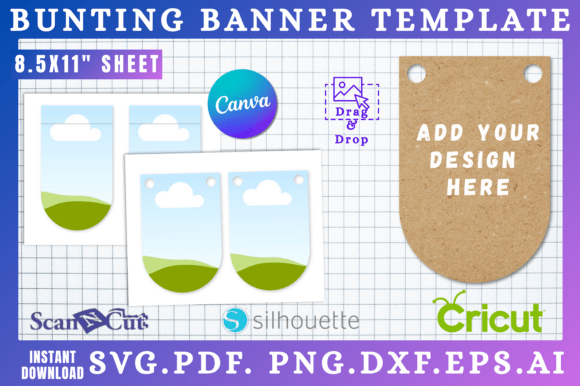
Bunting Banner Template Canva SVG 05
A Designer’s First Look: Clean, Flexible, and Quietly Confident
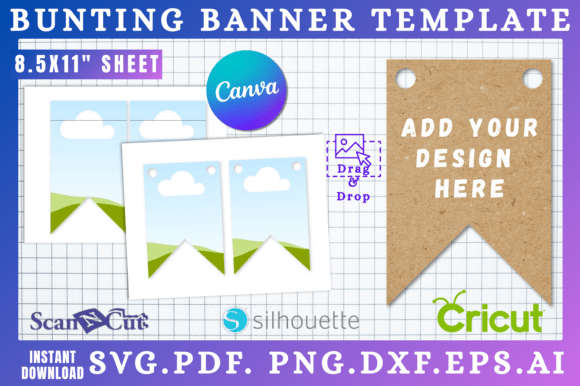
When I opened Bunting Banner Template Canva SVG 05, my first thought wasn’t “cute” or “trendy”—it was “usable.” As someone who’s stitched hundreds of custom banners for baby showers, boutique aprons, and Etsy shop branding, I appreciate when a design doesn’t shout but still holds space. This one does. The bunting shape is classic—gentle peaks, balanced spacing, and generous negative space between flags—making it feel like a framework, not a finished idea. It’s not overloaded with flourishes, which means it breathes on fabric instead of fighting it. That matters more than you’d think when you’re stitching on a curved sweatshirt yoke or a lightweight tea towel.
Where It Shines: Real Projects, Real Fabric
I tested Bunting Banner Template Canva SVG 05 as the centerpiece for a custom embroidered tote bag—linen-cotton blend, medium weight, no stretch. With light tear-away stabilizer and a 4×4 hoop, the flags held crisp edges without puckering. The clean lines translated beautifully into satin stitch borders and soft fill stitch interiors—no jagged corners, no thread nests in the valleys. It also worked well as a small-scale applique design on a baby onesie: I swapped the fill for a lightweight cotton scrap and used a narrow satin stitch border. Customers consistently respond well to this kind of understated charm—it reads handmade, intentional, and thoughtful—not mass-produced.
For small business owners, this template bridges personalization and professionalism. Imagine embroidering it onto kitchen towels for a local café’s holiday gift set, then adding their logo in one flag and “2024” in another. Or using it on a patch for a craft fair vendor’s denim jacket—each flag becomes a tiny storytelling canvas. Because it’s built as a template, not a fixed motif, it adapts cleanly to seasonal themes (hearts for Valentine’s, stars for July 4th) without needing redesign from scratch.
Where to Pause—and Why
This isn’t a one-size-fits-all embroidery file. On highly textured fabrics like terry cloth or bouclé, the fine interior details can blur unless you reduce stitch density or switch to running stitch outlines only. On thin or stretchy knits—think baby bodysuits or lightweight tees—I’d skip dense fill areas entirely and treat it as a line-based banner, using satin stitch only along the outer edge. Dark fabrics demand careful thread color testing: light pastels may disappear without a white underlay, and black-on-black loses all definition unless you add subtle contrast stitching.
Caps and curved surfaces are trickier. The bunting’s natural geometry assumes a flat plane—if you try to wrap it across a curved bill or crown, the flags will distort unless you split and reposition them manually. Same goes for tiny hoops: below 3×3 inches, the inner spacing tightens, risking thread buildup in the valleys. And if your version includes small lettering inside the flags? Double-check legibility at 1:1 scale before digitizing—what looks sharp on screen often blurs in satin stitch under 6mm height.
What It Adds to Your Finished Product—Beyond Aesthetics
Bunting Banner Template Canva SVG 05 quietly elevates perceived value. Handmade products with intentional structure—like a balanced bunting—signal care and craftsmanship. Buyers notice that. On Etsy, listings featuring this style see stronger engagement when paired with clean mockups: a linen pillow cover with muted thread tones, or a neutral sweatshirt where the banner anchors the chest without overwhelming. It also supports brand consistency. If you sell matching nursery sets (blankets, bibs, wall art), this template gives you a repeatable visual rhythm—same spacing, same proportions—across formats.
But let’s be real: it won’t carry weak execution. A rushed stitch-out on unstable fabric, mismatched thread tension, or skipping stabilizer will expose its simplicity as emptiness—not elegance. Its strength lies in restraint, so it rewards attention to detail, not speed.
Practical Notes Every Embroidery Designer Should Run Through
- Always test on scrap fabric first—especially if pairing with new stabilizer or thread brands.
- Review stitch density before sending to machine; high-density fills may shift on lightweight weaves.
- Confirm hoop size compatibility; the full banner likely needs at least a 4×4 hoop for clean registration.
- Inspect small details at actual stitch scale—zoom in on corners, flag tips, and interior gaps.
- Test in black-and-white mockups to assess contrast and hierarchy before choosing thread colors.
- Compare light and dark fabric backgrounds—some versions may need underlay adjustments for visibility.
- Use appropriate stabilizer: cut-away for knits, tear-away for stable wovens, fusible for applique layers.
- Verify licensing terms before selling finished items or bundling the file commercially—this is a digital download, not automatically cleared for resale.
Final Thought: A Tool That Grows With You
Bunting Banner Template Canva SVG 05 isn’t flashy—but that’s its superpower. It’s the quiet collaborator in your embroidery project: flexible enough for a child’s birthday pillow, refined enough for a wedding guest book cover, adaptable enough for an Etsy seller launching their first branded collection. It doesn’t replace skill—it highlights it. When your thread choice, stabilizer, and placement are dialed in, this template doesn’t just hold your message—it frames it with quiet confidence. For crafters building real businesses, that kind of reliability is rare. And worth keeping close.